LS Laird Scabar
All projects Project 02 — Robotics

Autonomous Robotic Claw

A sheet metal claw that measures how far away an object is and decides for itself when to close.

Type
Personal build
Control
Arduino + C++
Sensing
Ultrasonic
Actuation
Servo
Longer, in-depth explanation Flip the switch for the full engineering breakdown

Quick explanation

What it does

  • A robotic claw that works without anyone driving it.
  • An ultrasonic sensor watches for an object entering its range, and once it's close enough the servo closes the grip.
  • Designed as sheet metal in SolidWorks, with assembly drawings and control logic written in C++ on an Arduino.
  • Most of the work went into making the grab repeatable rather than just making it move.
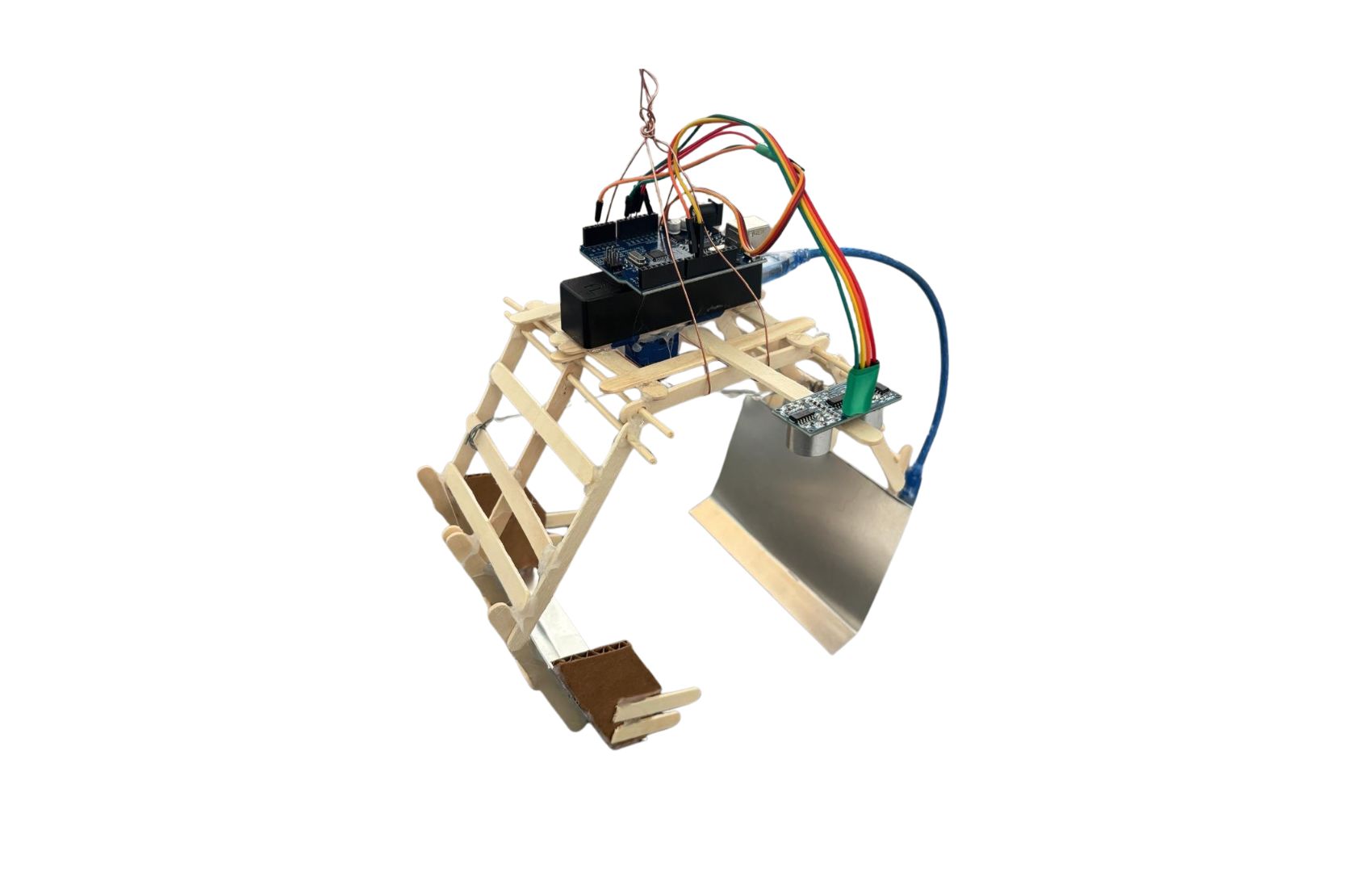
The assembled robotic claw

Deep dive

How the claw came together

Part 1: the goal

1. A self-contained sense-decide-act loop

  • The brief I set myself: a gripper that detects and grasps an object with no operator input.
  • Small enough to sit on a desk, and entirely self-contained — sensing, decision, and actuation all onboard.
  • That constraint drove everything: one sensor, one actuator, and logic simple enough to run on an Arduino.

Part 2: mechanical design

2. Designing it as sheet metal

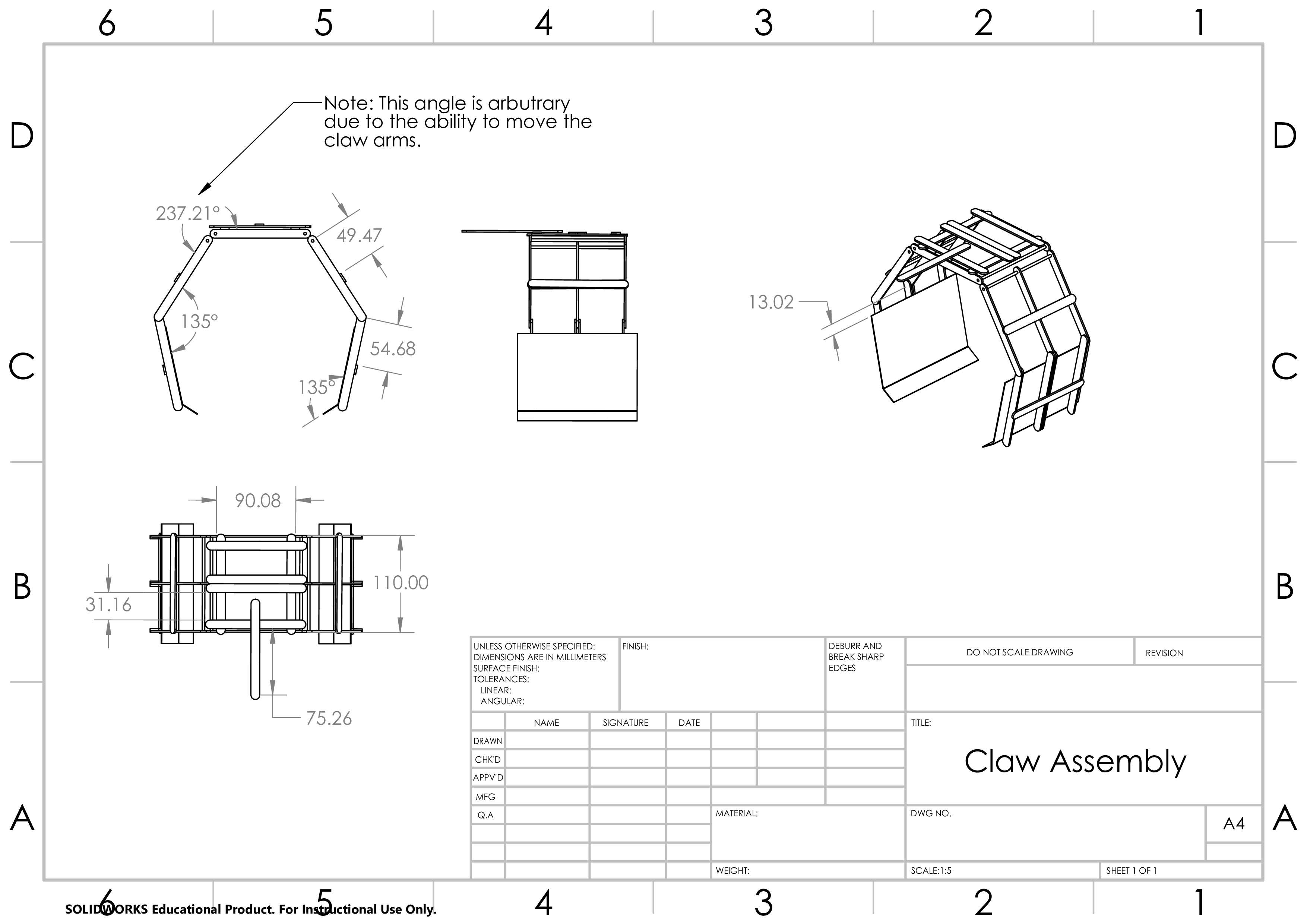
  • Built the claw in SolidWorks' sheet metal environment so every part could be flattened and cut from flat stock.
  • Sized the linkage so a single servo drives both jaws symmetrically through the full open-close range.
  • Produced dimensioned assembly and flat-pattern drawings for fabrication.
  • Bend allowances are unforgiving — designing the folded shape first and working backwards to the flat pattern does not work.
Claw assembly drawing

Part 3: electronics & control

3. Sensing distance and driving the servo

  • HC-SR04 ultrasonic sensor for distance measurement, polled continuously.
  • Servo actuation from an Arduino, with grip angle mapped to a calibrated closed position.
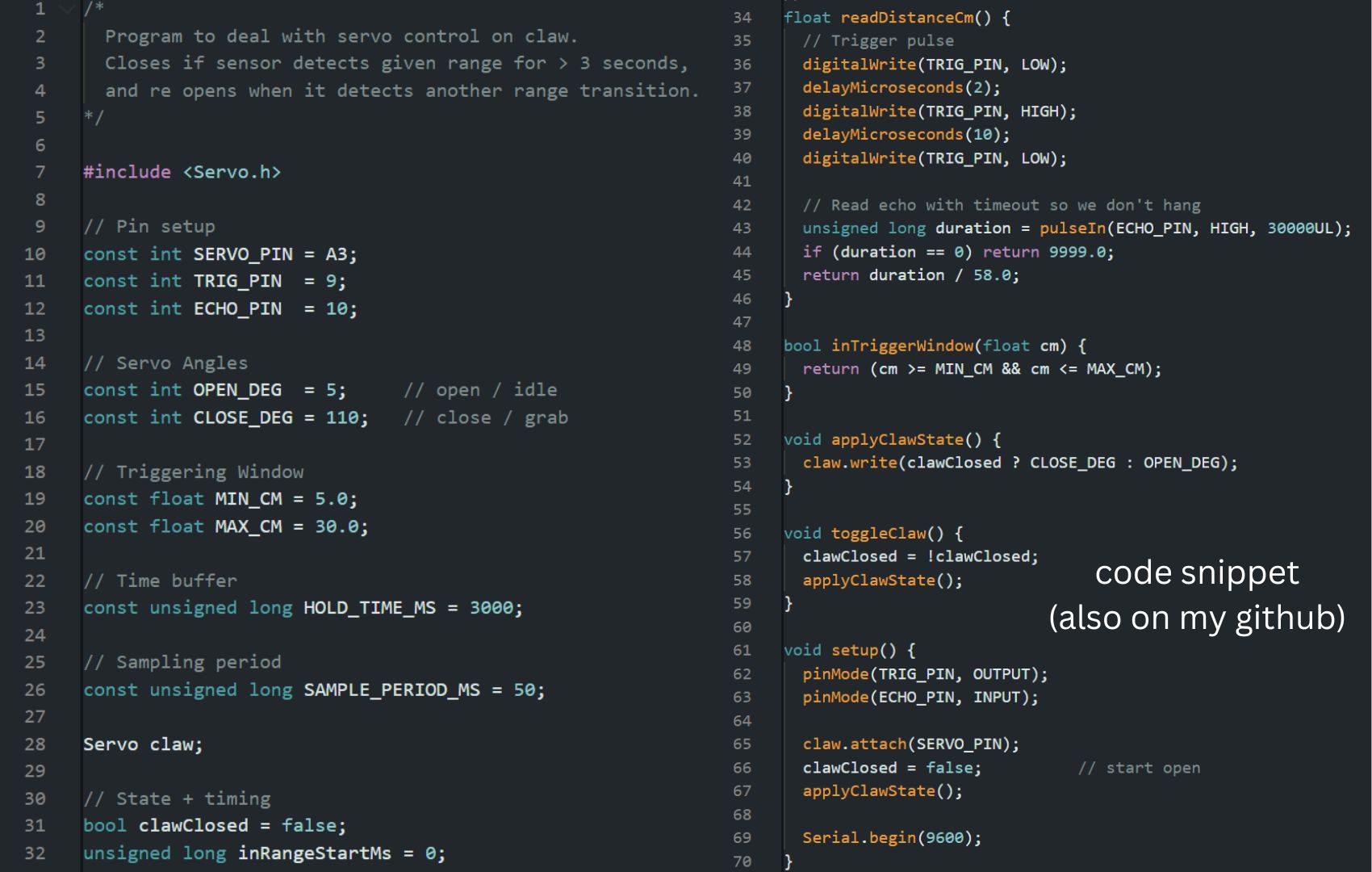
  • Control logic in C++: the claw only triggers when readings stay inside the trigger window across consecutive samples.
The claw control code

Part 4: the hard part

4. Making it reliable, not just working

Getting a reliable grab was much harder than getting a working one. Raw ultrasonic readings are noisy, and a single spurious short reading would snap the claw shut on nothing at all.

  • Added sample filtering so a trigger requires agreement across several consecutive readings.
  • Introduced a small dead zone to stop the claw oscillating when an object sat right at the threshold distance.
  • Reshaped the jaw profile after the first build — the original made contact at a single point and objects simply rolled out of the grip.

Nearly all the control code that ended up mattering was there to handle bad readings, not good ones. Sensor data is never as clean as the datasheet implies.